Survivor’s guilt and trauma
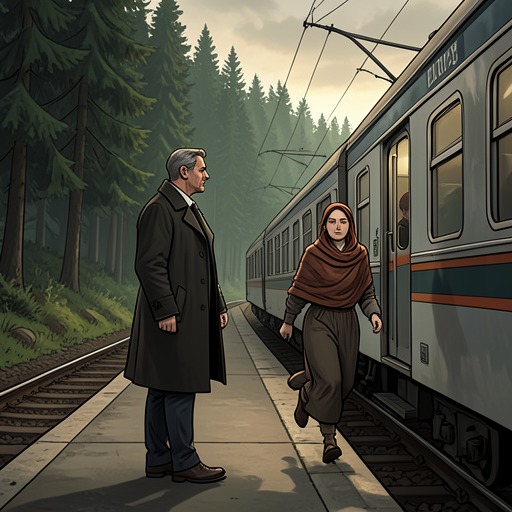
The Most Precious of CargoesThe father’s survivor’s guilt and trauma grow from a single desperate act whose consequences he cannot stop replaying: he threw one of his infant twins from a deportation train into the snow, intending to save the child, and was thereafter separated from his wife and remaining child. He survives the machinery of persecution, but survival offers no immediate release from grief or self-condemnation. His memories make the moment recur as if it could still be undone; only later does he learn that the child he saved is alive, and even then he chooses to leave her with the family who raised her.
The Wound and Its Aftermath
The father’s anguish is bound both to the instant he let the baby fall from the train and to what followed. At the platform where the family was separated, he could not even press his remaining twin to his chest for a moment. His beloved wife did not speak to him again before they alighted from the train of horror, and then they were parted. The narrative presents these losses together: the action that gave one child a chance at life became inseparable, in his memory, from the permanent separation of the family.
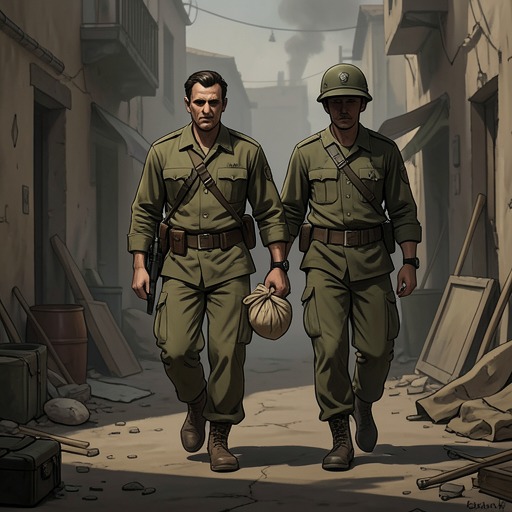
Afterward he is forced to shave the heads of transported prisoners. He gathers blond, dark, red, and gray hair into bales; the hair is packed with thousands of other bales and shipped to the land of the conquering generals to be made into wigs, finery, upholstery, or floor cloths. The work’s repetitive rhythm and the sorting of hair by color place him amid the material aftermath of mass deportation. During this period he longs to die. A small impulse to survive nevertheless takes root in him, though he mocks it, scorns it, and tries to drown it in bitterness. His wish to keep living does not cancel his grief; it persists alongside memories of his wife and children and of the act he blames himself for.
Repetition, Collapse, and Survival
When the trains stop, the father collapses under starvation, sickness, and despair. The Death’s Heads force prisoners to dig trenches in the snow and burn the bodies piled around the crematoria, which they are destroying in an effort to erase traces of their crimes. Hair once gathered and prized remains unshipped beside spectacles and heaps of clothing. The end of the shaving work brings no relief: the father’s surroundings continue to confront him with the dead and with the destruction of evidence of their deaths.
As he digs, he becomes delirious and repeatedly relives the moment he threw his child into the snow. The snow under his feet is also the snow through which he imagines the baby falling; the hole he digs for the bodies becomes, in his thought, the place where he too will eventually be burned. He turns the choice over in relentless self-questioning, wondering why he made that gesture and why he did not accompany his wife and both children to the end of the journey. The narrative links his longing to disappear with this repeated memory: he imagines the family rising together in smoke, while he remains alive to remember that they did not.
Two fellow prisoners drag him into a nearby shack when he collapses, preventing him from being thrown into the flames while still half alive. He wakes among piled corpses and regards the shack as an appropriate place to wait for death. Instead, a young soldier wearing a red star recognizes that he is still alive, gives him water from a canteen and biscuits, and carries him outside onto ground free of corpses. Under the spring sun, grass and white blossoms have replaced the snow and the boots of the Death’s Heads. A bird sings; then the father’s long-dry eyes fill with tears, and he recognizes those tears as evidence that he is alive again.
Survival Becomes a Responsibility
The possibility that his daughter might also have survived gives his survival a new direction. The thought does not erase his trauma; it turns continued life into a responsibility to search for her. He walks west with the Reds, collapses from starvation outside a church, and is helped by a priest who feeds and prays for him before he sets out again.
At a reunification camp, his emaciated appearance and the number tattooed on his forearm identify him. The camp gives him food and shelter, but settling there does not quiet the past. He returns in memory to the train, the snow, the forest, the prayer shawl, and the old woman; above all, he sees his wife’s eyes as she turned away from him. The camp also confronts him with former victims and former tormentors living in the same crowd: some seek to begin again, while others try to disappear among refugees. He cannot settle on a future. He wonders whether to return to his country of origin, resume medical studies, or open a hairdressing salon, but first he must find his daughter.
Even that purpose is clouded by trauma. He cannot remember the name he gave the child. Carrying the small payment that enables him to leave the camp, he follows an abandoned railway and passes through forests, towns, and villages. The war is over for others, whose streets hold songs, flags, speeches, and firecrackers; to him, the celebrations sharpen the sense that he remains alone in mourning his wife, his children, and the other dead. He moves through the festivities like an apparition, unable to join a public declaration of renewal while his family’s fate remains unresolved.
Recognition and Chosen Silence
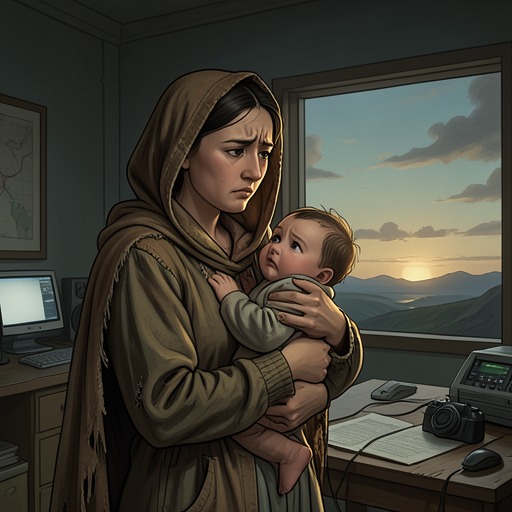
At a village stall, hunger leads him to a table of small cheeses displayed on a prayer shawl. The cloth, the cheeses, and the goat beside the seller bring recognition: the woman is the one who has raised his daughter, and the child sitting with her is the baby he threw from the train. The daughter is alive, happy, and at ease with the woman she calls her mother. In the encounter, the father understands the act that has haunted him differently: the child’s survival began with the gesture he could not forgive himself for making.
He takes a cheese and reaches toward the girl’s cheek. She catches his hand and presses it to her lips before laughing. The gesture gives him contact, but not recognition: she does not know him as her father. He sees her kissing the woman who raised her and decides not to reveal himself. He believes he has nothing to offer his daughter and fears upsetting the happiness he has found. After pausing and considering whether to approach, he forces himself to leave. His choice does not undo the separation or resolve his grief. Instead, the final encounter makes love take the form of restraint: he recognizes his daughter, confirms that she has survived, and gives up the chance to claim her in order to preserve the life she has built.
Narrative Significance
The father’s trauma is shaped by repetition, silence, and delayed recognition. The train scene returns in his delirium and at the camp, each time entangling the snow, his wife’s last look, and the child he threw. His inability to remember the child’s name gives concrete form to what terror and loss have taken from him; later, he recognizes her not through a name but through the cheese stall, the goat, and the woman who has cared for her.
His survival therefore has no simple victory over the past. The narrative first shows the act as a source of near-unbearable guilt, then reveals that it also saved the daughter. Yet recognition does not restore the family, and reunion does not become a conventional claim of fatherhood. The father’s final withdrawal holds together joy, grief, and responsibility: he has found the child he feared was dead, but allows her to remain with her chosen mother rather than make his own suffering the center of her life.